|
4.a.i. Horizontal mean dust mixing ratio
|
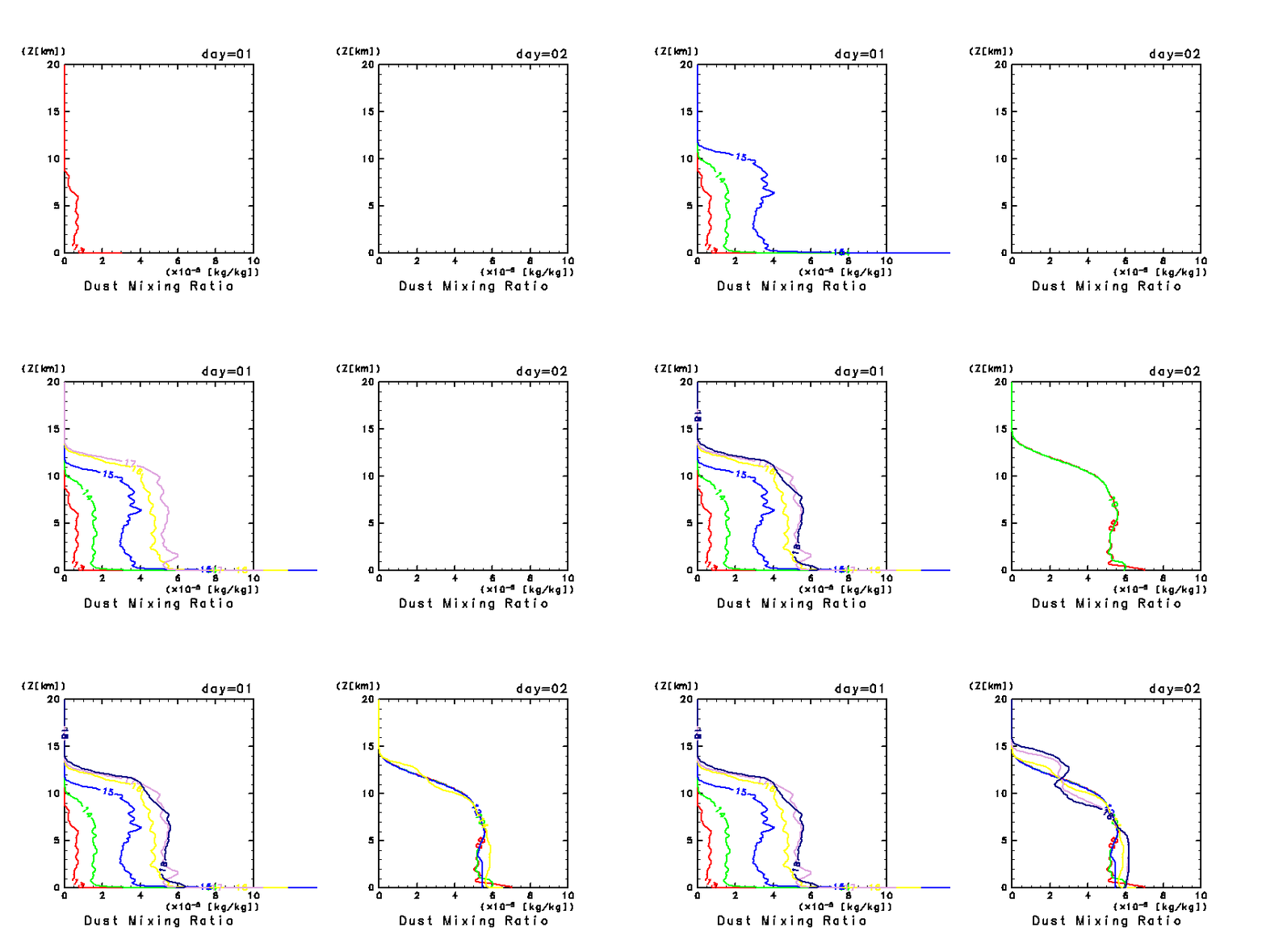
Figure 11a shows vertical profiles of
horizontal mean dust mixing ratio for days 1 and 2. On day 1, as a
result of dust injection and mixing, there is a large vertical
gradient of dust mixing ratio from 10 to 13 km. By day 2, dust reaches
the bottom of the stratosphere and is transported into higher
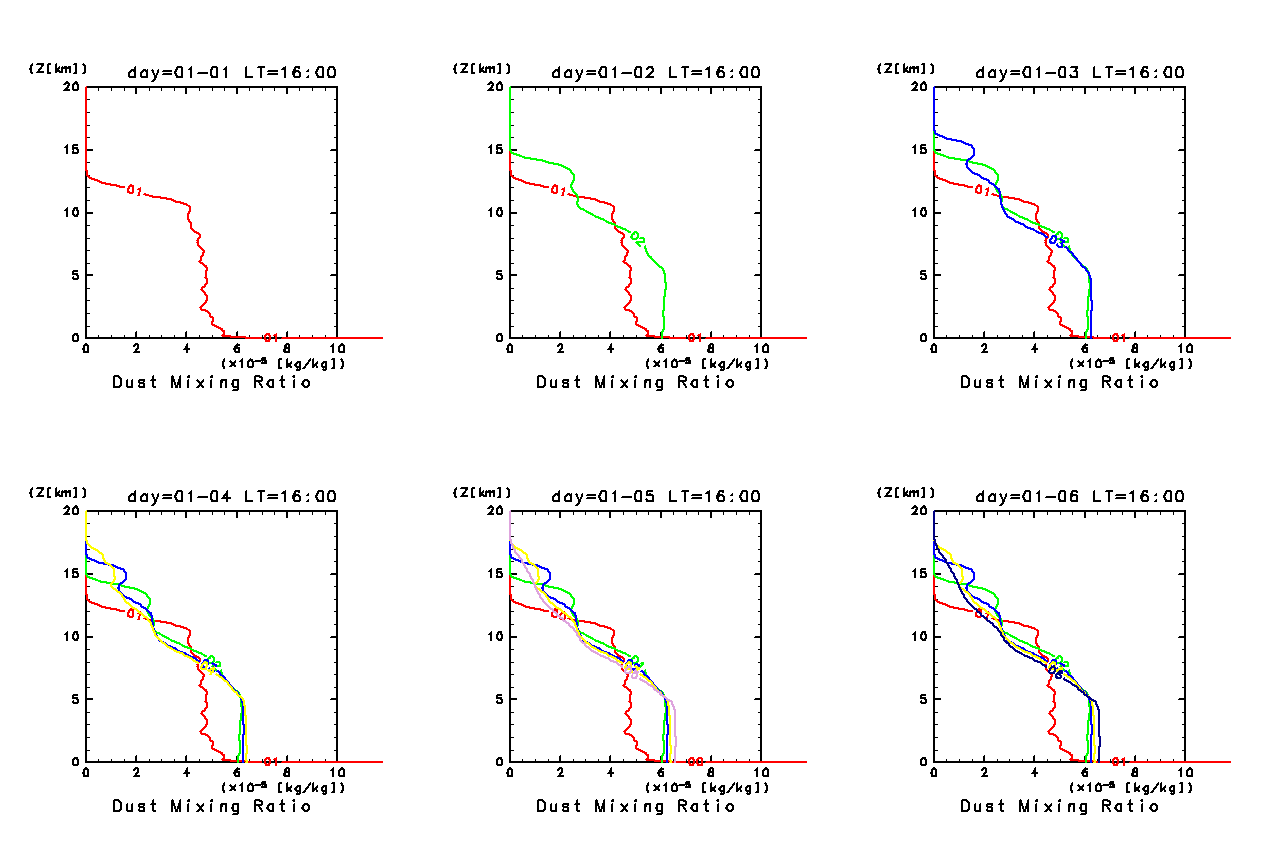
altitudes. The vertical profile of horizontal mean dust mixing ratio
does not significantly vary after day 4 (Figure 11b).
Horizontal mean dust mixing ratio in the convection layer is
vertically uniform and slightly increases as depth of the convection
layer decreases. This indicates that the system is in a quasi
equilibrium state where the total amount of dust in the atmosphere
does not change significantly (Figure
9); the amount of dust injection is roughly in balance with the
amount of dust sedimentation. In the region above the convection
layer, dust mixing ratio slightly decreases as dust sedimentation
progresses slowly.
|
|
Figure 11a: Vertical profiles of horizontal mean dust mixing
ratio plotted for (left panel) every 1 hour from 13:00 to 18:00 LT on day 1,
and (right panel) every 2 hours from 8:00 to 18:00 LT on day 2.
|
|
|
Figure 11b:
Vertical profile of horizontal mean dust mixing ratio at 16:00 LT for days 1 through 6.
|
|


