|
4.b.iii. Atmospheric heating profile
|
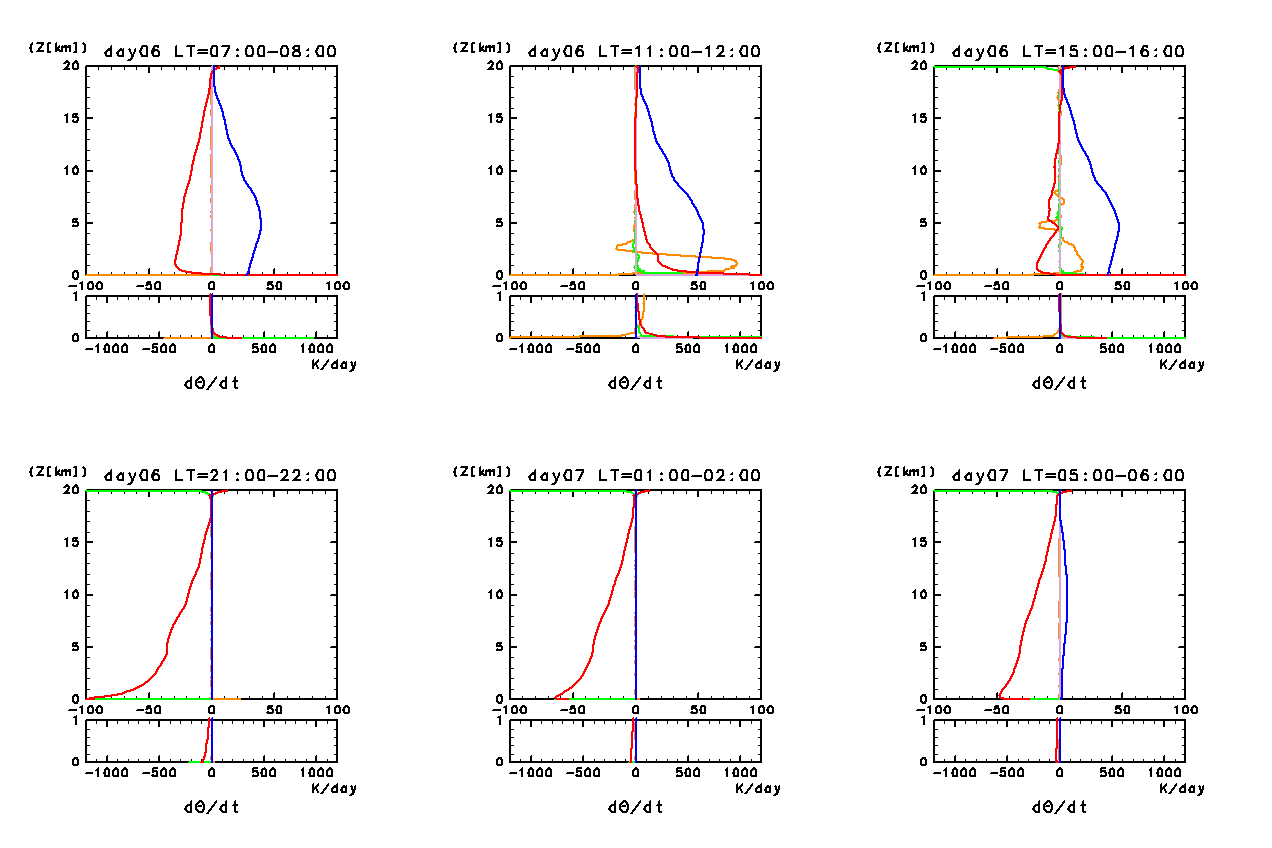
Figure 12d shows the horizontal and temporal
mean vertical profiles of the atmospheric heating rate for potential
temperature on day 6 of the dusty case. The major component of
radiative heating above 2 km during daytime is dust absorption of
solar radiation. The magnitude of convective heating and the depth of
a convective cooling layer near the surface are similar to those of
the dust-free case. During nighttime, the entire region of the
calculated domain is subject to infrared radiative cooling due to
CO2 and dust.
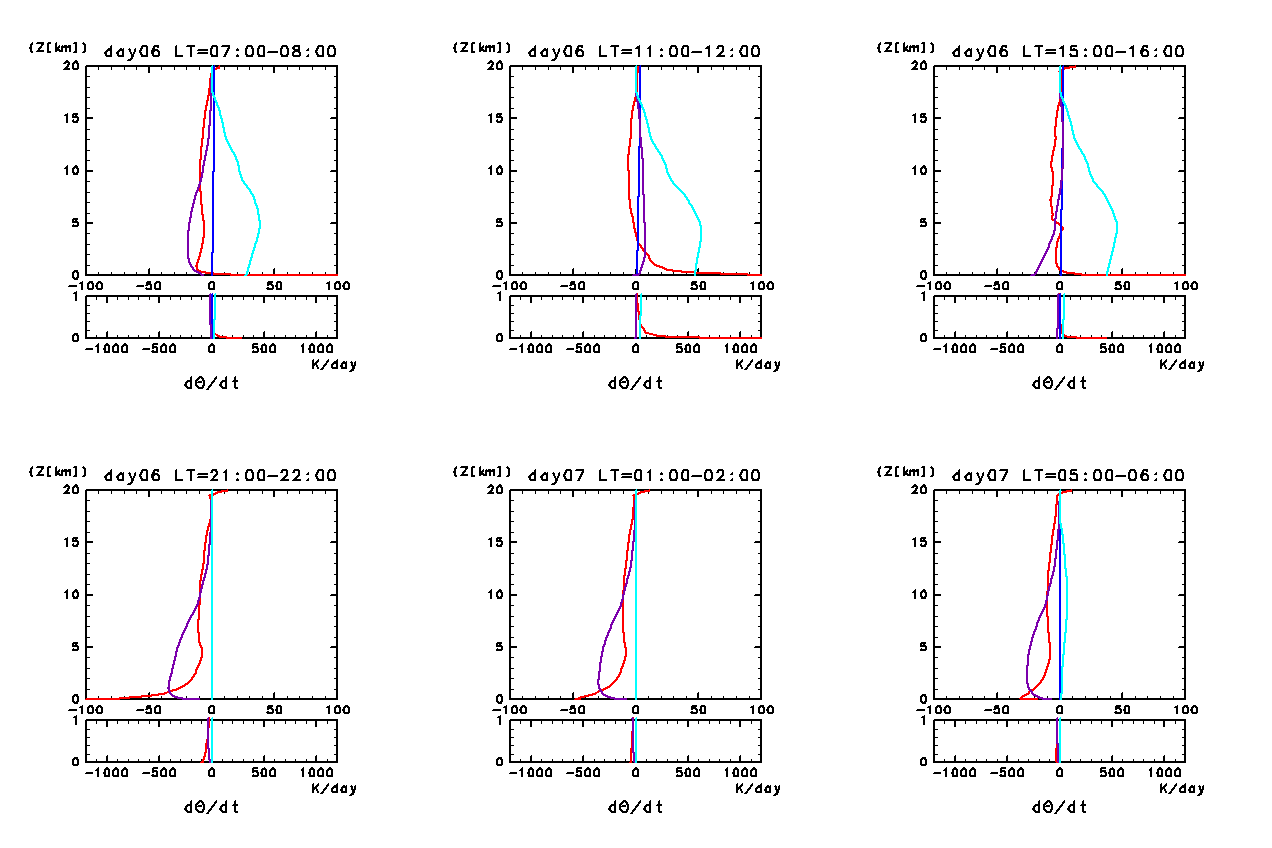
Each component of the radiative heating profile shown
in Figure 12d is presented
in Figure 12e. The profile of near infrared
radiative heating due to CO2 is vertically
uniform over the calculated domain. In the convective layer, where
dust mixing ratio is uniform, the profile of radiative heating due to
dust is vertically uniform. These two components tend to suppress
thermal convection, since they warm the convection layer uniformly in
the vertical direction. The radiative component that provides the
largest contribution to driving thermal convection is the infrared
heating due to CO2, which has a vertical
profile concentrated near the surface.
|
|
|
Figure 12d: Diurnal change of horizontal and temporal mean
vertical profiles of atmospheric heating rate (K/day) for
potential temperature for day 6 of the dusty case. Orange line denotes
convective heating, red line denotes infrared radiative heating, blue
line denotes solar radiative heating, green line denotes turbulent
diffusion of potential temperature, and the light purple line denotes
heating due to turbulent dissipation. The lower panel shows a
magnified view of the profiles below 1 km.
|
Figure 12e: Diurnal change of horizontal and temporal mean
vertical profiles of radiative heating rate (K/day) for
day 6 of the dusty case. Red and purple lines denote infrared
radiative heating due to CO2 and dust,
respectively. Blue and light blue lines denote solar radiative heating
due to CO2 and dust, respectively. The
lower panel shows a magnified view of the profiles below 1 km.
|
|


